


What is Screen Printing?
In a nutshell, screen printing is the process of pressing ink through a fine, fabric screen with a squeegee to print an image. The Chinese invented the technique roughly 1,000 years ago. Over the centuries, it made its way to Europe and America, and it began to find commercial use in the early 20th century. Now screen printed images are everywhere we look, on glass, ceramics, paper, posters, fine art, and t-shirts.
It’s the single, most popular custom product printing technique in the world because it’s affordable and renders bold, opaque, stunning colors.

The Steps of Screen Printing
Preparing Artwork
If you’re considering having an image screened onto anything, from a t-shirt to a beer stein, the quality of the art file is critical. If you can get the art in vector format, this gives the screen printer a perfect digital rendition of your image. Vector formats are typically created in Adobe Illustrator or Google Vectr.
Raster formats such as JPEG and PNG can work for screen printing, as long as the images are over 300 pixels per inch (DPI) in resolution and saved at the same size they will appear on the printed surface.

The Screen Printing Process
A thin, fine-meshed fabric is stretched over a frame, like a painter’s canvas or a cloth stretched over a rectangular embroidery frame. This is the screen.
The screen is pressed against the shirt (or other product), and a thick ink is deposited at one end. A squeegee pulls the ink over the top of the fabric, pushing it through a stenciled design in the mesh and onto the t-shirt, leaving a bright, single-color image. The ink is allowed to dry, and the process is repeated for other colors.

Screen Printing Technology
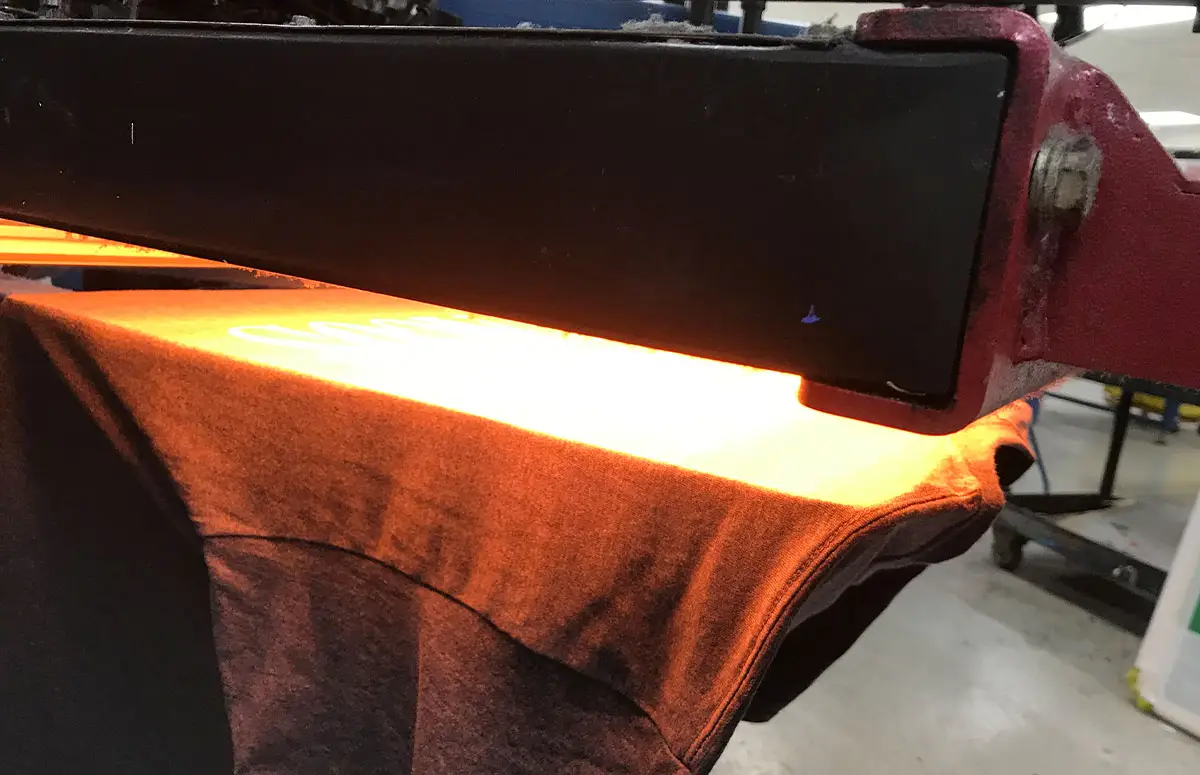
Throughout history—and still today in fine art applications—screen printing has been done by hand, often with two people on opposite sides of the screen, taking turns pulling the squeegee back and forth toward themselves. But modern screen printing is done by machines that take speed and accuracy to new heights. There are plenty of systems out there, from the very simple to the positively grandiose, in terms of productivity.

Even with so many screen printing systems available, the actual process doesn’t change much from one to the next. Push the ink through the screen and stick it to the printing surface.
Screening inks are extremely varied, with plenty of textures and color styles available, and this sets screen printing apart from other garment printing processes. Let’s take a quick tour of ink options …

Types of Screen Printing Ink
Plastisol Ink
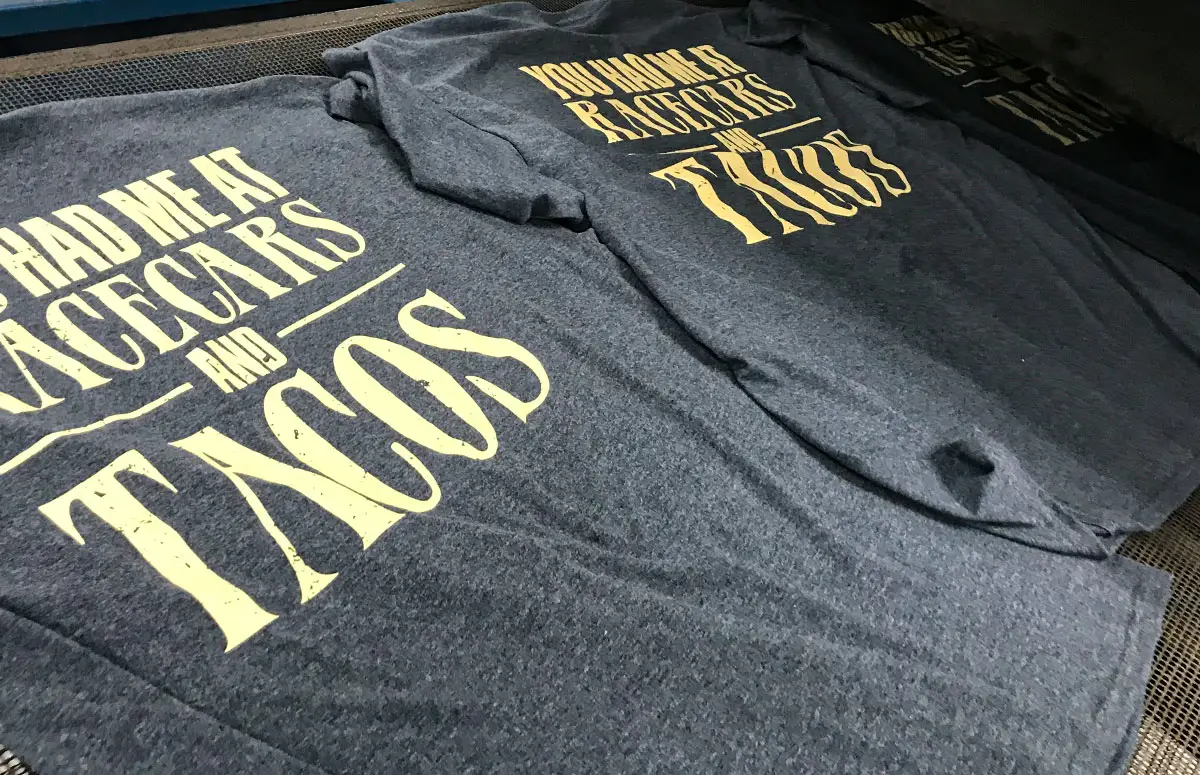
Let’s start with a high-tech screening ink. Plastisol is made of the same basic chemical as the polyvinyl chloride (PVC) pipes under your kitchen sink. For screening applications, the PVC is broken down into tiny particles and mixed with a liquid that makes the particles flexible and able to bond with fabric. It is, in fact, a tough, bright, flexible, plastic coating that’s pressed into the grain of the garment, and it’s very durable.


Discharge Ink
Discharge inks work almost like bleach, lightening the color of existing dyes in the fabric of a t-shirt. This is a fairly uncommon method, but it has its place for certain designs and fabric colors.
Flocking
Harken back to second grade, when you made that pretty Christmas card for Mom by drawing a picture with Elmer’s glue and sprinkling it with glitter. Flocking is a high-tech version of that, in which a glue is applied by screen printing, and foils are attached to the sticky parts of the garment.
Water-Based Ink
If you’re hoping to get away from the shiny finish of plastisol, water-based inks are less permanent, but they offer better fabric penetration, leaving a softer matte finish.
A Versatile Offering of Ink Options
Screening ink is available in a variety of textures, metallics and other weird options. If you have a crazy idea for your shirt design, tell one of our customer service reps about it. You may be surprised what we can do.
Screen Printing Processes
Different types of artwork require different types of screen printing techniques. The material on which you’ll be printing is also a factor; some images look great on one type of surface, but not so great on others. Below is a quick overview of screen printing methods used for various applications.
Half-Tone Screen Printing
If you’ve ever looked closely at the tiny dots that make up black and white images in newspapers and magazines, you have a basic understanding of how halftones work. Only black ink is used to create the images, but gray areas have fewer black dots printed in them, and white areas may have no dots at all. The same process—often printed in multiple colors—is used for half-tone screen printing.

Spot Color Screen Printing
This very popular technique yields bold splashes of color. You choose ink colors from the screen printer’s catalog that are formulated to render thick layers of dynamic hues. Artwork comprised only of spot colors is easy to set up, which can save you money. Spot color screen printing can be very cost effective when you’re printing four colors or less.
Duotone Screen Printing
Let’s take half-tones a step further. Duotone printing literally means “two tones,” but in the printing world, it can refer to one, two or more colors printed in half-tone patterns. Duotone prints can achieve striking visual effects with very few colors, from a sepia tone effect to anything a good graphic designer can imagine.


CMYK (Sometimes Called “Color”) Printing
CMYK has long been the standard way of creating color images for print publications. It stands for cyan, magenta, yellow and black, the four colors that are combined to create the illusion of every color in the rainbow. Yes, they should have called it CMY … B—for black, but artists are sometimes a little backwards.
In the world of screen printing, CMYK processes can render beautiful and fairly complex images.
Simulated Process Printing
The term process printing refers to the time honored, CMYK printing method discussed above. Simulated process screen printing combines this principle with spot color printing (using standard screening ink colors rather than cyan, magenta, yellow and black inks) to offer a modernized version of halftone screening processes. Also called spot process or sim process, this method is more computer- and screen-print-friendly. It makes more realistic imaging possible on fabric, and it is currently the preferred process for half toned images on textiles.
Which Screen Printing Process is Right for You?
Different methods work better for different types of designs, and US Logo’s customer service staff can help you choose the right one. Here are the factors we’ll look at when you call us about a screen printing job:
• How many garments do you need to print?
Some screen printing methods involve higher setup costs than others, and if you’re only printing a few shirts, this can dramatically affect the cost per unit—and your choice of processes.
• What type of textile will you be printing on?
Cotton fabrics are compatible with some inks, while polyesters are compatible with others, so textile type will play a huge role in choosing a screen printing technique. If you’re printing on glass, paper or metal, this will further limit the screening process used.
• What type of design are you printing?
Does your design have large areas of solid colors or will it require some kind of halftoning method? Are you looking for a soft, vintage appearance or a glossy, plastic-like finish for the graphics? The type of art you bring us will play a defining role in choosing the right screen printing technique.
• What’s your budget?
You may have more than one option for printing methods, but setup costs, blank garment costs and quantities can affect the total tab and influence your choice of processes.

Advantages of Screen Printing
- Very predictable color reproductions.
- Tough, durable colors that hold up over many launderings.
- Usually the most affordable printing method for large quantities.

As a general rule of thumb, screen printing is the preferred method for spot color designs like text and simple graphics. It can also render complex art, but only makes sense for large print runs that spread setup costs out over many units.
With smaller runs, especially for halftoned or photorealistic designs, digital printing methods like direct to garment (DTG) may make more sense. The designs don’t hold up as well after a few passes through the washing machine, but they look awesome and have very low setup costs.
You don’t have to be an expert on screen printing to take advantage of it; just give us a call, and we can walk you through the decision-making process to make sure you get a beautiful product that fits your budget.
Would you like to see if screen printing is right for you? Call us at 316-264-1321 and tell us about your project.
<!–To learn more about garment printing options, check out our article, Which Custom T-Shirt Printing Method is Best for My Design?–>