


What Are the 5 Types of Embroidery? A Wichita Guide to Styles, Materials & When to Use Each
From hand-stitched art to polished logos on polos and caps, embroidery spans multiple techniques. This Wichita-focused guide from U.S. Logo breaks down the five core types of embroidery, what each is best for, and how to choose the right approach for apparel or hobby projects.
Need professional embroidery for uniforms, hats, or jackets? Call (316) 264-1321 or
contact U.S. Logo. Visit us at 520 N West St, Wichita, KS 67203.
1) Surface Embroidery
The “classic” hand-embroidery seen on hoops and heirloom linens. Using stitches like backstitch, satin stitch, stem stitch, chain, and French knots,
you create outlines and fills directly on woven fabric (cotton, linen).
- Best for – Decorative hoops, flour-sack towels, monograms on home textiles.
- Materials – Stranded cotton floss, hoop, needles, water-soluble marker.
- Difficulty – Beginner-friendly, great for first projects and gifts.
2) Counted-Thread (Cross-Stitch & Blackwork)
Designs are plotted on a grid and stitched by counting threads in even-weave fabric (Aida, linen). Cross-stitch uses “X” stitches; blackwork uses linear patterns.
- Best for – Patterned samplers, pixel-art motifs, clean geometric looks.
- Materials – Aida/linen, charts, stranded floss.
- Difficulty – Beginner to intermediate, accurate counting is the key skill.
3) Crewel & Canvaswork (Needlepoint)
Crewel traditionally uses wool thread on linen; canvaswork (needlepoint) uses a stiff canvas and a variety of stitches to create dense, durable textures and fills.
- Best for – Pillows, belts, upholstery accents, richly textured art pieces.
- Materials – Wool or tapestry yarns, mono/interlock canvas, tapestry needles.
- Difficulty – Intermediate, planning fills and color blending elevates results.
4) Digitized Machine Embroidery (Commercial)
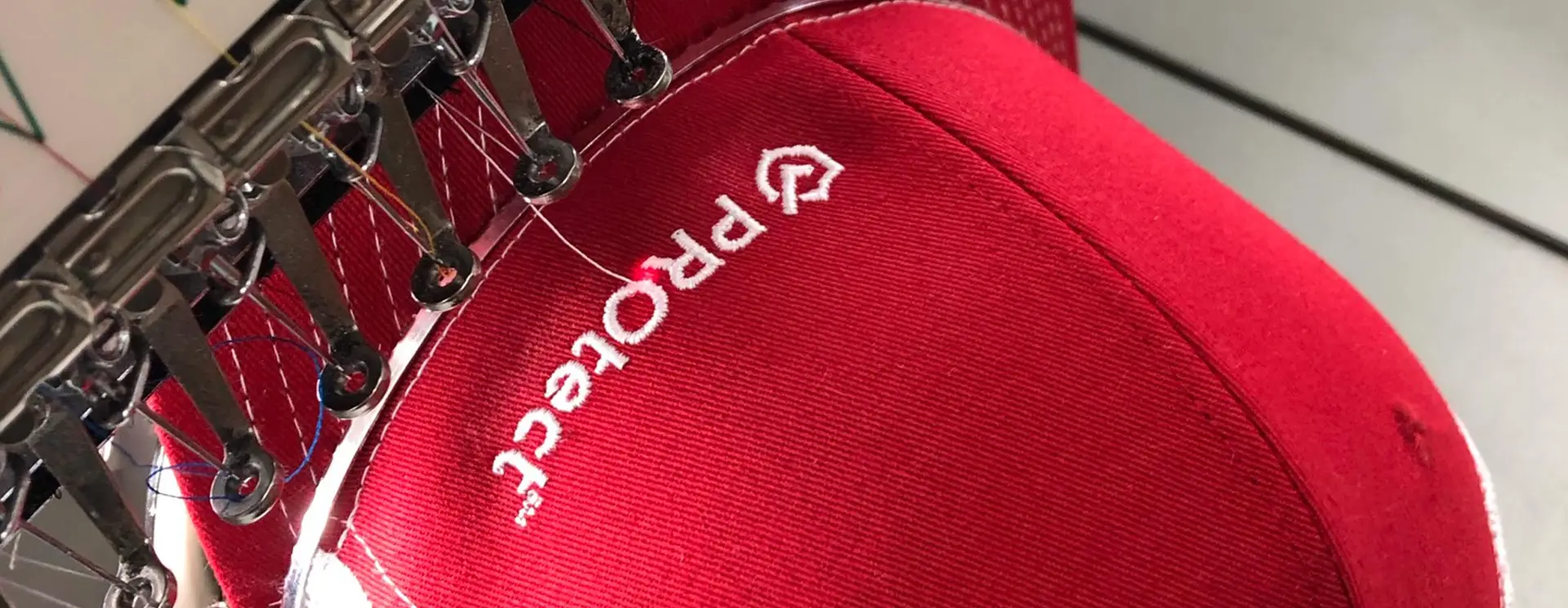
This is the polished look you see on polos, hats, jackets, and bags. Artwork is “digitized” into a stitch plan, then stitched by commercial machines with polyester or rayon thread.
It’s durable, consistent, and ideal for branding.
- Best for – Left-chest logos, cap fronts, jacket backs, bags and uniforms.
- Materials – Poly thread for durability, cut-away/tear-away stabilizers matched to fabric.
- Difficulty – Requires professional digitizing for clean results at small sizes.
U.S. Logo handles digitizing, thread matching, and placements, and can combine embroidery with Screen Printing for full apparel programs.
5) Free-Motion Machine Embroidery (Appliqué/Art)
Using a domestic or industrial machine with the feed dogs lowered, the operator “draws” with thread, guiding the fabric by hand.
Often paired with appliqué (fabric shapes stitched onto a base) for bold, graphic results.
- Best for – One-off art pieces, names/monograms, appliqué patches.
- Materials – Stabilizers, fusible web for appliqué, various threads.
- Difficulty – Intermediate, coordination and practice produce smooth curves and fills.
How to Choose for Apparel vs. Craft
- Corporate apparel & hats – Choose digitized machine embroidery for a clean, durable logo.
- Fashion tees & gifts – Surface embroidery or appliqué for artisanal looks on wovens (use stabilizer on knits).
- Home décor – Canvaswork/needlepoint for dense, long-wearing pillows and accents.
- Pattern lovers – Counted-thread (cross-stitch) for charted, repeatable designs.
Not sure which path fits your project? Contact U.S. Logo or call (316) 264-1321 for recommendations.
FAQ
Which type is easiest for beginners?
Surface embroidery (running/backstitch/satin) or cross-stitch. Both start with simple supplies and clear techniques.
Digitized commercial embroidery with polyester thread and proper stabilizer for clean edges and long wear.
Can you mix types?
Yes, e.g., machine-embroidered logos on polos and free-motion appliqué on spirit wear or patches.
Do I need stabilizer?
For apparel: usually yes. Cut-away for knits (tees/polos), tear-away for stable wovens and caps.
External Resource
Thread & supplies overview: Madeira USA.